A photograph can make a haircut conversation much easier—but only if you explain what you like about it. “Like this photo” might mean the face, the body length, or just the overall softness. Breaking the look into a few details helps you and the groomer agree on a realistic plan.
Bring two kinds of photograph
First, bring a recent picture of your own dog standing naturally, with the coat visible. Add a face photo if you want to discuss details around the head or ears. Second, choose a clear reference showing a style you like. A previous haircut on your own dog can be especially useful.
Choose well-lit images without filters that hide the coat. A side view helps show body and leg length; a front view helps explain the face. If the reference is a different breed or coat texture, say which parts you want to borrow rather than expecting an exact match.
Talk through the look, one area at a time
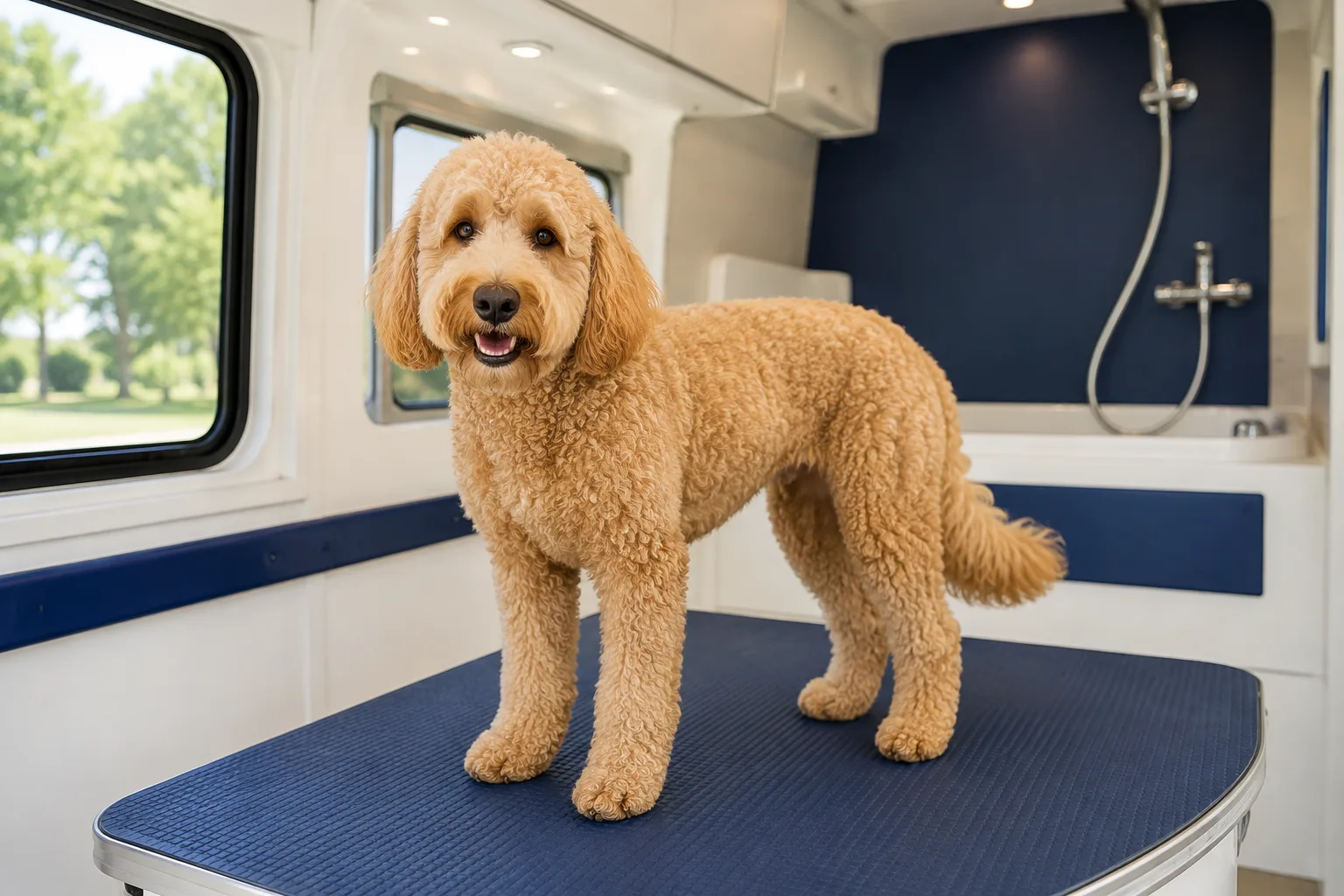
The illustration above shows the areas worth discussing: the face, hanging ears, body coat, legs, and tail. It is a conversation aid, not a promise of a particular cut or evidence of a client appointment.
- Body and legs
- Describe how much length you want left and whether you prefer a similar outline all over. Ask the groomer to explain the finished length rather than relying only on a style nickname.
- Face
- Point out whether you like a rounded outline, a tidier muzzle, or a more open look around the eyes. Discuss what is suitable for your dog’s coat and comfort.
- Ears
- Show the length and outline you prefer. Say whether the reference’s ears are part of the look you want or simply happen to be in the photograph.
- Tail and feet
- Explain how full or tidy you would like these areas. Mention sensitivities or previous handling difficulties before the appointment.
Let the current coat guide the decision
Your dog’s coat texture, density, existing length, and tangles can change what is practical today. A look may need adapting or growing out over several appointments. Tell the groomer about matting before booking; maintaining a particular length should not come at the expense of your dog’s comfort.
A styled haircut and de-shedding care are not interchangeable services. For a dog with a double coat, discuss the appropriate coat-care plan rather than assuming a haircut from another breed is suitable.
Choose a style you can maintain
Tell the groomer how much brushing you can realistically do and ask which tools and routine suit the proposed style. A photo does not show the upkeep behind the finished look. Our doodle and curly-coat guide can help you prepare that conversation.
A useful way to explain your preference
“I like the face in this photo, but I would prefer a shorter body. Here is how my dog looks today, and this is the brushing routine I can manage. What would you recommend for this visit?”
This is an example consultation prompt—not a customer testimonial.
Confirm the plan before grooming begins
Agree on the main priorities, any practical changes to the reference, and how to contact you if the coat assessment changes the plan. Ask how the selected package and any additional work affect the price. See our guide to coat type and grooming prices.
For visits in Glen Cove or Islip, check the local access guidance as well as preparing your style references.
Further reading: the AKC’s professional grooming education standards discuss client communication and coat-specific decisions. VCA’s coat-care guide explains different grooming needs. These links do not imply that those organizations endorse our business.